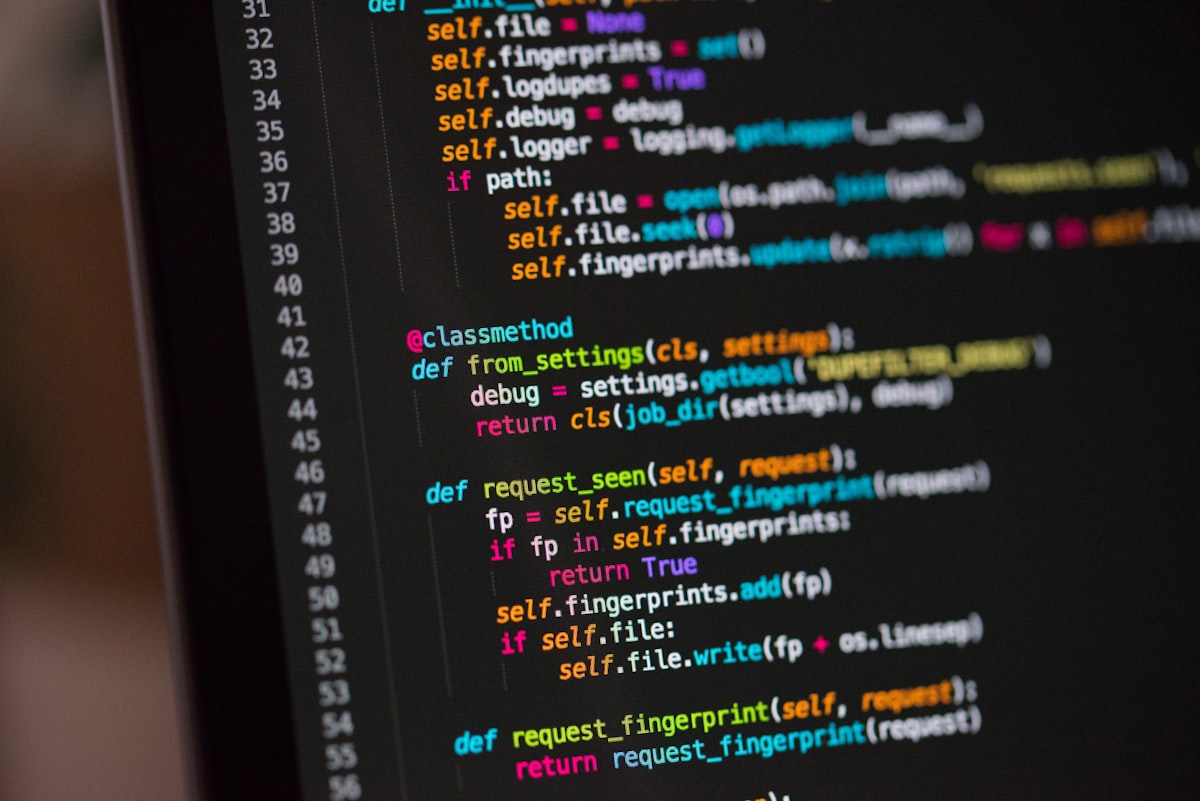
Top 10 Web Development Trends in 2026
The web development landscape never stands still. Every year brings a fresh wave of tools, frameworks, philosophies, and paradigms that reshape how developers build for the web. In 2026, that pace has only accelerated. Artificial intelligence has moved from a novelty to an essential layer in development workflows, edge computing has redefined where code actually runs, and user expectations have never been higher.
Whether you are a seasoned full-stack engineer, a front-end specialist, or someone just getting started with their first portfolio website, understanding where the industry is heading is not just useful — it is necessary. In this article, we break down the Top 10 Web Development Trends in 2026 that every developer, designer, and digital business owner should know about.
1. AI-Assisted Development Is Now the Standard
If 2023 was the year everyone talked about AI-powered coding tools, 2026 is the year they became non-negotiable. Tools like GitHub Copilot, Cursor, and a growing lineup of AI-native IDEs have fundamentally changed how developers write, review, and debug code. Today's developers are not just writing code — they are prompting, reviewing, and refining AI-generated logic.
The shift is significant. Developers who use AI assistance report completing tasks 30–50% faster than those who do not. More importantly, AI tools are no longer limited to simple autocomplete. In 2026, they can generate full components, suggest architectural improvements, explain legacy codebases, and even write unit tests automatically.
For web developers, this means the skill set is evolving. Writing clean, readable code matters more than ever because AI learns from it, and knowing how to prompt effectively has become as valuable as knowing a programming language.
2. Edge Computing and Edge Functions Are Mainstream
For years, web applications ran on centralized servers. Then came content delivery networks (CDNs). Now, in 2026, edge functions — small pieces of server-side code that run at the network edge, geographically close to the user — are mainstream.
Platforms like Vercel, Cloudflare Workers, Deno Deploy, and AWS Lambda@Edge have made it incredibly easy to deploy logic that executes in milliseconds anywhere on the planet. This means lower latency, better performance, and the ability to personalize content at scale without sacrificing speed.
For web developers, the practical implication is that the distinction between "frontend" and "backend" has blurred further. A single developer can now build a globally distributed application with near-instant response times using JavaScript or TypeScript alone.
3. WebAssembly (Wasm) Expands Web Capabilities
WebAssembly promised to bring near-native performance to the browser, and in 2026, that promise is being fully realized. Wasm has moved beyond niche use cases like game engines and scientific simulations. It is now powering design tools, video editors, AI inference engines, and even parts of e-commerce platforms — all running inside a browser tab.
The emergence of the WASI (WebAssembly System Interface) standard has also opened the door to running Wasm outside the browser, on edge servers and even embedded devices. Languages like Rust, C++, Go, and Python can now compile to Wasm, giving web developers access to a vast ecosystem of high-performance libraries that were previously off-limits.
If you have been ignoring WebAssembly, 2026 is the year to start paying attention.
4. The Rise of Meta-Frameworks
Choosing a JavaScript framework used to mean picking between React, Vue, or Angular. In 2026, developers are increasingly reaching for meta-frameworks — opinionated, full-stack solutions built on top of those core libraries.
Next.js, Nuxt, SvelteKit, Astro, and Remix have all matured into production-grade platforms with deep support for server-side rendering, static generation, API routes, and edge deployment. These frameworks abstract away the complex infrastructure decisions, allowing teams to focus on building features rather than configuring servers.
Astro, in particular, has gained enormous traction in 2026 for content-heavy sites thanks to its islands architecture, which ships zero JavaScript by default and hydrates components only when necessary. The result is dramatically faster page loads and better Core Web Vitals scores — which matters enormously for SEO.
5. Accessibility Is No Longer Optional
Accessibility has been talked about for years, but in 2026, it has become a legal and commercial imperative. Regulatory frameworks like the European Accessibility Act (EAA) have come into full effect, requiring digital products to meet strict accessibility standards or face significant penalties.
Beyond compliance, there is a growing recognition that accessible design is simply good design. Screen reader compatibility, keyboard navigation, appropriate color contrast, and ARIA roles are no longer afterthoughts — they are part of the definition of "done." New tooling, including AI-powered accessibility auditors, has made it easier to catch and fix issues before they reach production.
Developers who invest in accessibility skills in 2026 are positioning themselves for long-term value in the marketplace.
6. Serverless Architecture Continues to Evolve
Serverless computing is not new, but its architecture and use cases continue to evolve rapidly. In 2026, developers are building more sophisticated serverless applications that handle complex workflows, real-time data processing, and multi-step orchestrations — all without managing a single server.
The combination of serverless functions with event-driven architectures and services like AWS EventBridge, Google Pub/Sub, and Cloudflare Queues has enabled highly scalable, resilient systems. Costs remain a major selling point — you pay only for what you use — but the real advantage is developer velocity. Teams can ship features faster when they are not concerned with server provisioning and scaling.
The challenge in 2026 is managing cold starts, observability, and distributed tracing in increasingly complex serverless systems, which has spawned a new category of developer tooling to address those needs.
7. Progressive Web Apps (PWAs) Gain New Ground
Progressive Web Apps have had a complicated history, but 2026 is proving to be a turning point. With Apple finally opening iOS to third-party browser engines in key markets (a response to regulatory pressure), PWAs can now deliver consistent, high-quality experiences across all major platforms.
PWAs offer the best of both worlds: the reach and discoverability of the web, combined with app-like features such as offline access, push notifications, and home screen installation. For businesses looking to reach users without the friction of app store distribution, PWAs represent a compelling and cost-effective solution.
Web developers who master Service Workers, the Cache API, and the Web App Manifest are finding strong demand for their skills as more companies reconsider their native app strategies.
8. Web Components and Micro-Frontends Gain Traction
As web applications grow in size and complexity, organizations are increasingly adopting micro-frontend architectures — an approach where a large frontend application is decomposed into smaller, independently deployable pieces owned by different teams.
Web Components, the native browser standard for building reusable custom elements, play a central role in this trend. Unlike framework-specific components, Web Components work everywhere — in React, Vue, Angular, or plain HTML. This makes them ideal as the building blocks for design systems that need to span multiple teams and technology stacks.
In 2026, major enterprise organizations are investing heavily in Web Component-based design systems, and the tooling around them — including Lit, Stencil, and FAST — has matured considerably.
9. Security-First Development Practices
Cyber threats have grown in both sophistication and frequency, and the web development community has responded with a stronger security-first mindset. In 2026, practices like Content Security Policy (CSP), Subresource Integrity (SRI), HTTP security headers, and dependency auditing are standard parts of every professional developer's workflow.
The rise of supply chain attacks — where malicious code is introduced through third-party packages — has put new emphasis on software composition analysis and the use of software bill of materials (SBOM) documents. Developers are more carefully vetting their dependencies, using tools like Snyk, Socket.io Security, and GitHub's built-in Dependabot alerts.
Additionally, authentication has evolved. Passkeys, backed by the FIDO2 standard, are rapidly replacing traditional passwords, and developers are expected to implement them correctly and securely.
10. Sustainability and Green Web Development
Perhaps the most thought-provoking trend of 2026 is the growing focus on sustainable web development. The internet accounts for a significant share of global electricity consumption, and as digital products become ubiquitous, the environmental impact of our technical decisions is coming under scrutiny.
Green web development involves building websites and applications that consume less energy — through efficient code, optimized assets, reduced JavaScript payloads, smarter caching strategies, and choosing hosting providers powered by renewable energy. The Green Web Foundation and tools like the Website Carbon Calculator are helping developers measure and reduce their digital carbon footprint.
Users and investors are increasingly asking questions about digital sustainability, and forward-thinking organizations are treating it as a core part of their engineering values.
Final Thoughts
The web development industry in 2026 is defined by intelligence, speed, inclusivity, and responsibility. AI is augmenting what developers can do; edge computing is pushing performance to its physical limits; meta-frameworks are reducing complexity; and the industry is, slowly but surely, getting more serious about accessibility, security, and environmental impact.
Staying relevant as a web developer means embracing continuous learning. Pick one or two trends from this list that resonate with your current work, invest in understanding them deeply, and build something with them. The developers who thrive in 2026 and beyond are those who stay curious, stay adaptable, and never stop shipping.
Did you find this article helpful? Share it with your network and bookmark it for future reference. The web never stops evolving — and neither should you.