Why Python is the Best Language for Beginners
Every year, millions of people around the world decide to learn programming for the first time. Some are students chasing a career in tech. Others are professionals looking to automate repetitive tasks. Many are simply curious minds who want to understand how the digital world actually works. And almost all of them face the same overwhelming first question: Which programming language should I learn first?
The answer, in 2026, is the same as it has been for the past decade — and the reasons have only grown stronger.
Learn Python.
Python is not just popular. It is the most widely taught programming language in universities across the world. It consistently tops developer surveys as one of the most loved and most used languages. It powers everything from simple scripts to machine learning systems, web applications, scientific research, and financial modeling. And most importantly for you, as someone just starting out — it is genuinely the easiest language to learn without sacrificing real-world usefulness.
This article explains exactly why Python deserves that reputation, and why choosing it as your first language is one of the best decisions you can make as an aspiring programmer.
1. Python Reads Like Plain English
The most immediate and obvious reason Python is perfect for beginners is its syntax — the rules that govern how you write code.
Compare this simple task: printing the phrase "Hello, World!" to the screen.
In Java, you would write:
public class Main {
    public static void main(String[] args) {
        System.out.println("Hello, World!");
    }
}
In Python, you write:
print("Hello, World!")
That is it. One line. No curly braces, no class declarations, no boilerplate. Just a clear, human-readable instruction.
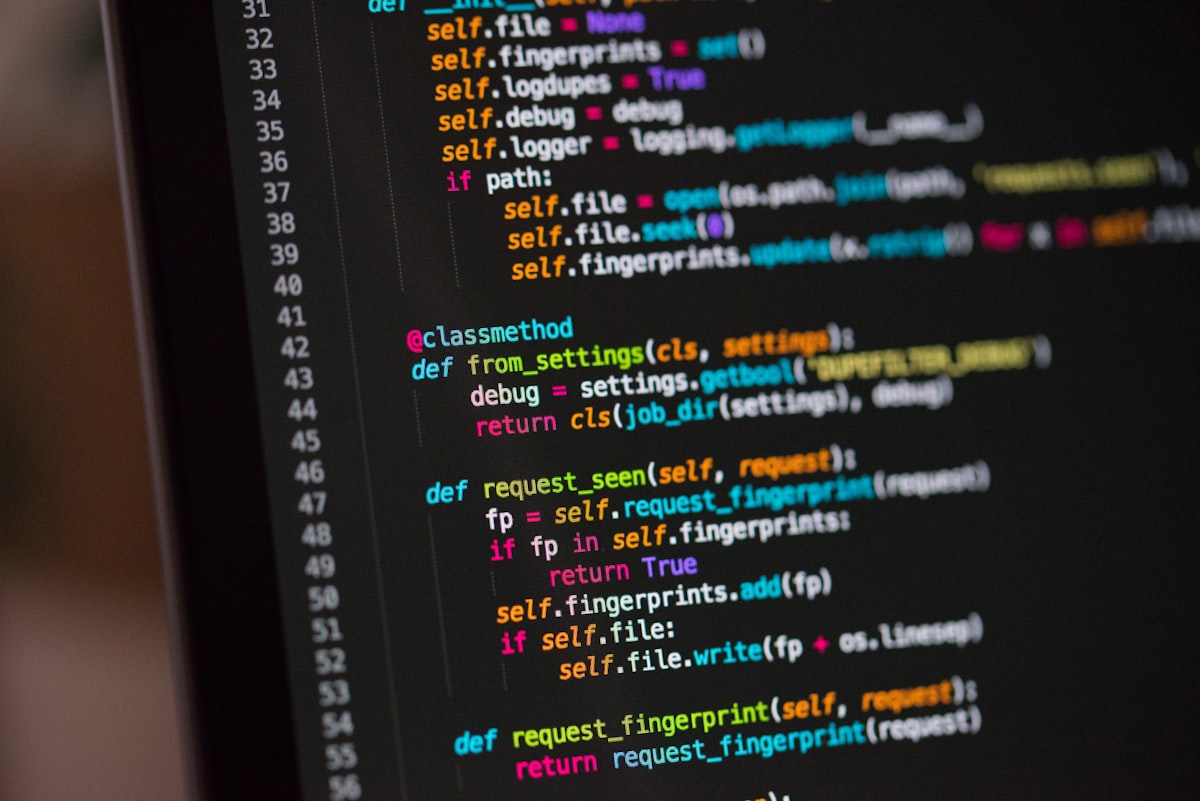
This is not a trivial example. It reflects a core design philosophy baked into Python from the very beginning. Python's creator, Guido van Rossum, wanted a language that prioritized readability and simplicity. The result is a language that feels more like writing structured English than deciphering cryptic symbols.
For beginners, this matters enormously. When you are just starting out, your brain is already working hard to understand what programming concepts mean — variables, loops, functions, conditions. You do not need the extra cognitive burden of fighting with complex syntax at the same time. Python removes that barrier so you can focus on thinking like a programmer, not just memorizing punctuation rules.
2. Python Has a Gentle and Forgiving Learning Curve
Every programming language has a learning curve — a measure of how difficult it is to go from knowing nothing to writing useful code. Python's curve is famously gentle, especially in the early stages.
You do not need to declare variable types. You do not need to manage memory manually. You do not need to understand object-oriented programming before you can write your first useful script. Python lets you start small, with simple concepts, and gradually introduces complexity as you are ready for it.
This is in sharp contrast to languages like C or C++, which demand a thorough understanding of memory management and pointers before you can do much of anything useful. Even JavaScript, another popular beginner language, has a number of quirks and gotchas — asynchronous behavior, type coercion, scope issues — that can confuse newcomers badly.
Python's philosophy is to let you build real, working programs quickly, which keeps beginners motivated and engaged at the most critical point in their learning journey.
3. Python Is Incredibly Versatile
One concern beginners often have is: "If I learn Python, will it actually be useful for the kind of work I want to do?"
The answer is almost certainly yes — regardless of what that work is.
Python is the dominant language in data science and machine learning. Libraries like NumPy, Pandas, Matplotlib, and Scikit-learn have made Python the undisputed tool of choice for data analysts, researchers, and AI engineers around the world. If you have any interest in working with data, building predictive models, or exploring artificial intelligence, Python is not just a good choice — it is the only sensible one.
Python is also widely used in web development. Frameworks like Django and FastAPI allow developers to build powerful, scalable web applications with relatively little code. Companies like Instagram, Pinterest, and Spotify have all used Django as part of their backend infrastructure.
Beyond that, Python is extensively used in automation and scripting — writing small programs that perform repetitive tasks automatically, like renaming thousands of files, scraping websites for data, sending automated emails, or interacting with APIs. This is arguably where Python provides the most immediate value for everyday people who are not full-time developers.
Python also plays a critical role in scientific computing, finance, cybersecurity, game development, and DevOps. Wherever you want to take your programming skills, Python almost certainly has a place there.
4. Python Has the World's Largest Beginner Community
Learning to code can be a lonely and frustrating experience — especially when you get stuck, which you will, repeatedly and completely normally. What makes an enormous difference is having a community to turn to for help.
Python has one of the largest, most welcoming, and most active programming communities in existence. Platforms like Stack Overflow, Reddit's r/learnpython, the official Python Discord server, and countless YouTube channels and blogs are full of people eager to help beginners work through problems.
The sheer volume of free learning resources available for Python is staggering. Sites like freeCodeCamp, Real Python, CS50 from Harvard (which uses Python), Automate the Boring Stuff with Python, and Codecademy offer structured, high-quality Python education completely free of charge. Books, video courses, interactive platforms, and guided projects are available at every skill level.
This means that no matter what you are struggling with, someone has already asked the same question online — and a detailed answer is almost certainly waiting for you with a quick search.
5. Python Is the Language of Artificial Intelligence and the Future
We are living through one of the most significant technological shifts in human history. Artificial intelligence is moving from research labs into everyday products, businesses, and workflows at breathtaking speed. Machine learning models are writing text, generating images, analyzing medical scans, predicting financial markets, and driving cars.
And the language powering the overwhelming majority of this revolution is Python.
Frameworks like TensorFlow, PyTorch, Keras, and Hugging Face Transformers — the tools that researchers and engineers use to build and deploy AI systems — are all Python-first. The entire modern AI ecosystem has been built with Python as its foundation.
For beginners in 2026, this is not just an interesting fact — it is a career signal. If you learn Python, you are positioning yourself to participate in the most exciting and economically impactful field in technology. Even if you do not want to be a machine learning engineer, understanding Python gives you the ability to use AI tools, automate AI-powered workflows, and integrate intelligent features into your own projects.
Learning Python today is learning the language of the future.
6. Python Is Free, Open Source, and Runs Everywhere
Some programming environments require expensive licenses, specific operating systems, or complex setup procedures. Python has none of these barriers.
Python is completely free and open source. You can download it from python.org in minutes, install it on Windows, macOS, or Linux, and start writing code immediately with nothing more than a text editor and a terminal. Tools like VS Code — also free — provide a polished, professional development environment that works beautifully with Python out of the box.
For students, career-changers, and developers in parts of the world where paid software is inaccessible, this is a significant advantage. The full power of Python, its libraries, its frameworks, and its community is available to everyone, everywhere, at no cost.
7. Python Skills Are Highly Employable
Let us talk practically for a moment. Learning to code is an investment of your time, energy, and often money. It is fair to ask: will Python skills actually lead to jobs?
The answer is a clear and resounding yes.
Python consistently appears near the top of every major programming language job listing survey. According to data from LinkedIn, Indeed, and Stack Overflow's annual developer survey, Python developers are among the highest-paid and most in-demand technical professionals globally. Job titles that require or prefer Python include Data Scientist, Machine Learning Engineer, Backend Developer, Data Analyst, DevOps Engineer, Automation Engineer, Research Scientist, and many more.
The average salary for a Python developer in the United States in 2026 ranges from approximately $90,000 for junior roles to over $160,000 for senior positions — with machine learning engineers at the higher end of that spectrum and beyond.
Even for non-technical roles, Python skills are increasingly valued. Marketing professionals who can analyze campaign data, financial analysts who can build automated models, and operations managers who can script workflow improvements are finding themselves at a significant advantage over peers without those skills.
8. Python Teaches Transferable Programming Concepts
Here is something that many beginners do not realize until later in their journey: the specific programming language you learn matters far less than the underlying concepts you develop along the way.
Variables, loops, conditionals, functions, data structures, recursion, object-oriented design — these are universal ideas that apply across almost every programming language in existence. Once you understand them in Python, picking up JavaScript, Java, Go, or Rust becomes dramatically easier because you already know how to think.
Python teaches these concepts in the clearest possible way. Its clean syntax makes it easy to see exactly what a piece of code is doing. Its interactive interpreter lets you experiment in real time. Its error messages are among the most readable of any language.
Learning Python first does not lock you into Python forever. It gives you the strongest possible foundation to go anywhere the programming world takes you.
Common Objections — Addressed
"Is Python too slow for real-world use?" Python is indeed slower than compiled languages like C or Go in raw execution speed. But for the vast majority of applications — web services, data analysis, automation, AI — this is irrelevant. Python is fast enough, and where it is not, it can be paired with high-performance libraries written in C under the hood.
"Should I learn JavaScript instead?" JavaScript is an excellent language, especially if your primary interest is web development. But it has a steeper initial learning curve and more confusing behaviors for complete beginners. Many educators recommend Python first, then JavaScript. The two are not competitors — many professional developers use both regularly.
"Will Python still be relevant in 5 years?" Given its deep integration into the AI and data science ecosystems, Python is arguably more relevant today than at any point in its history — and that trajectory shows no sign of reversing.
How to Get Started with Python Today
Getting started with Python is one of the most frictionless entry points in all of programming. Here is a simple path to begin:
First, download and install the latest version of Python from python.org. It is free and takes about five minutes. Next, install VS Code as your code editor — it is lightweight, powerful, and has excellent Python support through a free extension. Then, pick one structured beginner resource and commit to it. "Automate the Boring Stuff with Python" by Al Sweigart (available free online) is one of the most beloved beginner books ever written. CS50's Introduction to Programming with Python from Harvard on edX is another exceptional free option.
Set a modest daily goal — even 30 minutes a day is enough to make meaningful progress. Build small projects as soon as possible. Print something to the screen. Write a calculator. Build a number guessing game. Automate a task you do repeatedly. Each small project builds confidence and momentum.
The hardest part of learning to code is not the code — it is starting. So start today.
Final Thoughts
Python is the best programming language for beginners not because it is the easiest, the fastest, or the flashiest — but because it strikes the perfect balance between accessibility and power. It is easy enough to learn quickly, yet capable enough to build virtually anything. It teaches real programming thinking without unnecessary complexity. It has a vast community, endless resources, and a job market that rewards it generously.
Whether you want to build websites, analyze data, automate your workflow, explore artificial intelligence, or simply understand how software works, Python is the most direct path from where you are today to where you want to be.
Pick up Python. Write your first line. And do not stop.