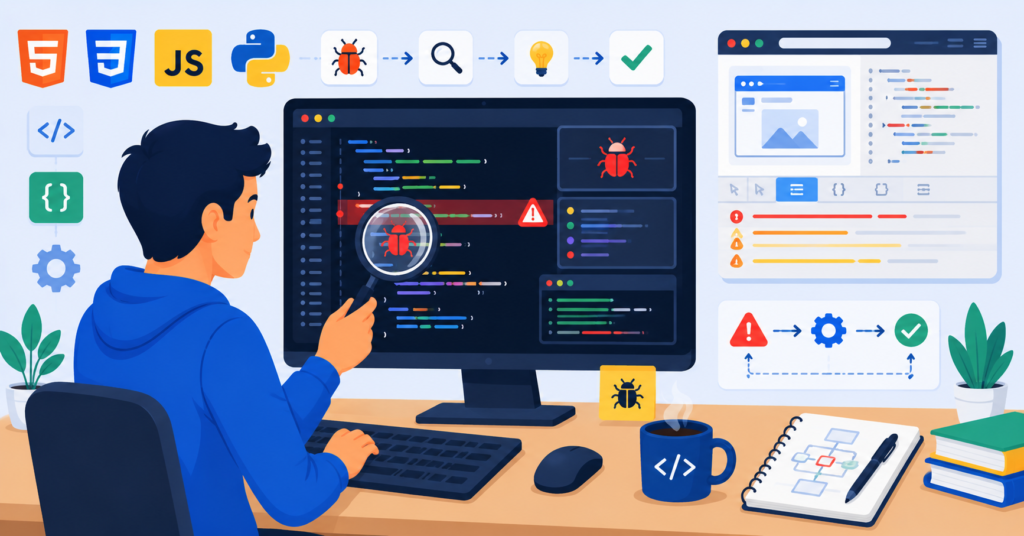
Learning to code is exciting, but it can also feel overwhelming. There are countless programming languages, tools, and tutorials available, making it difficult to know where to focus. The good news is that becoming a better programmer isn’t just about learning syntax—it’s about building the right habits.
In this guide, 10 Coding Habits Every Beginner Should Build, you’ll discover practical habits that can improve your coding skills, boost your confidence, and help you make steady progress. These habits apply whether you’re learning HTML, CSS, JavaScript, Python, or any other programming language.
Why Good Coding Habits Matter
Every experienced developer started as a beginner. The difference isn’t talent—it’s consistency and good practices.
Strong coding habits help you:
- Learn faster
- Write cleaner code
- Find bugs more easily
- Stay motivated
- Build better projects
- Prepare for real-world development
Small improvements made every day lead to big results over time.
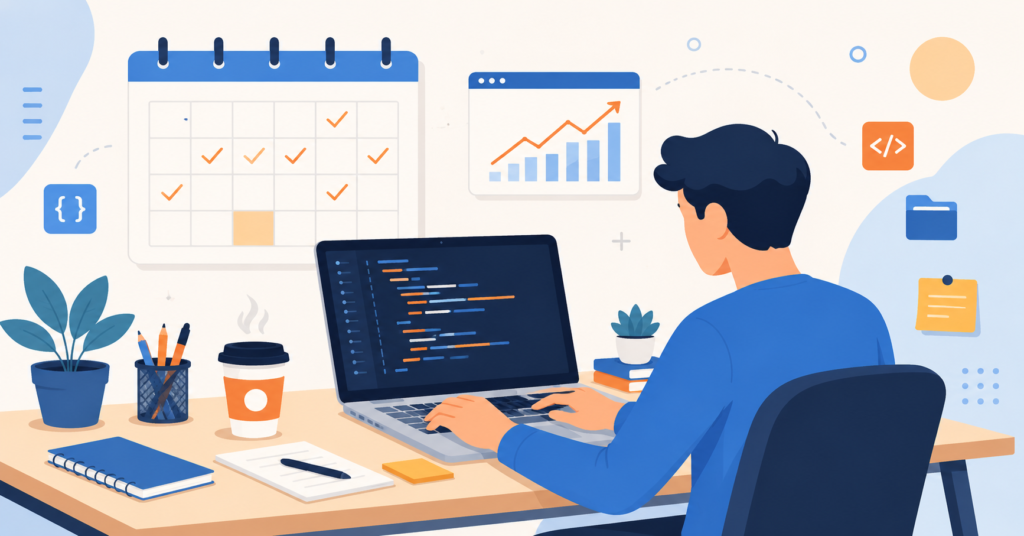
1. Code Every Day
One of the most valuable habits you can develop is coding regularly.
You don’t need to spend six hours a day writing code. Even 20 to 30 minutes of focused practice helps reinforce what you’ve learned.
For example, instead of watching another tutorial, try recreating a simple webpage or solving a small programming challenge.
Consistency beats long but infrequent study sessions.
2. Type the Code Yourself
Watching someone else write code can be helpful, but real learning happens when your fingers are on the keyboard.
Avoid copying and pasting code directly into your editor.
Instead:
- Type every line yourself.
- Experiment with small changes.
- Observe what happens when you modify the code.
Making mistakes is part of the learning process.
3. Read Error Messages Carefully
Many beginners panic when they see an error message.
Experienced developers do the opposite—they read it carefully.
Error messages often tell you:
- Which line has the problem
- What type of error occurred
- Where to start looking
Treat errors as helpful clues rather than obstacles.
4. Build Small Projects
Projects help connect the concepts you’ve learned.
After studying variables or HTML tags, create something simple like:
- A personal portfolio page
- A calculator
- A to-do list
- A quiz app
- A weather dashboard
Small projects teach problem-solving better than endless tutorials.
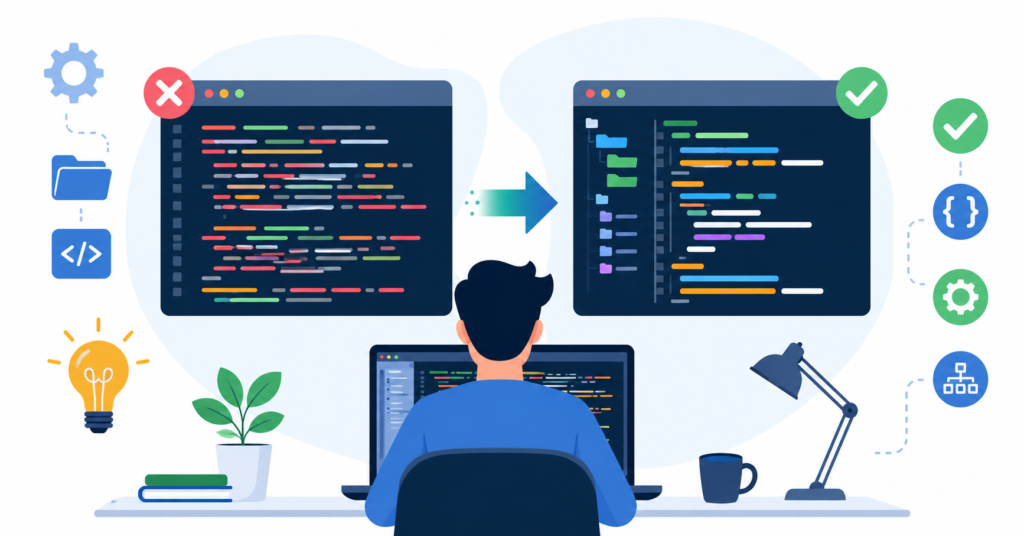
5. Keep Your Code Organized
Readable code is easier to understand and debug.
Here are a few simple practices:
- Use meaningful variable names.
- Add proper indentation.
- Group related code together.
- Remove unused code.
Compare these examples:
Poor:
“`javascript id=”n8w5xy”
let a = 25;
let b = 30;
Better:javascript id=”k4r2pm”
let productPrice = 25;
let shippingCost = 30;
Clear names make your code easier to understand later.

## 6. Practice Debugging

Debugging is a skill every programmer develops over time.

Instead of deleting everything when something goes wrong:

* Test one section at a time.
* Use `console.log()` or print statements.
* Check your variables.
* Verify your conditions.

Learning to solve problems is just as important as writing code.

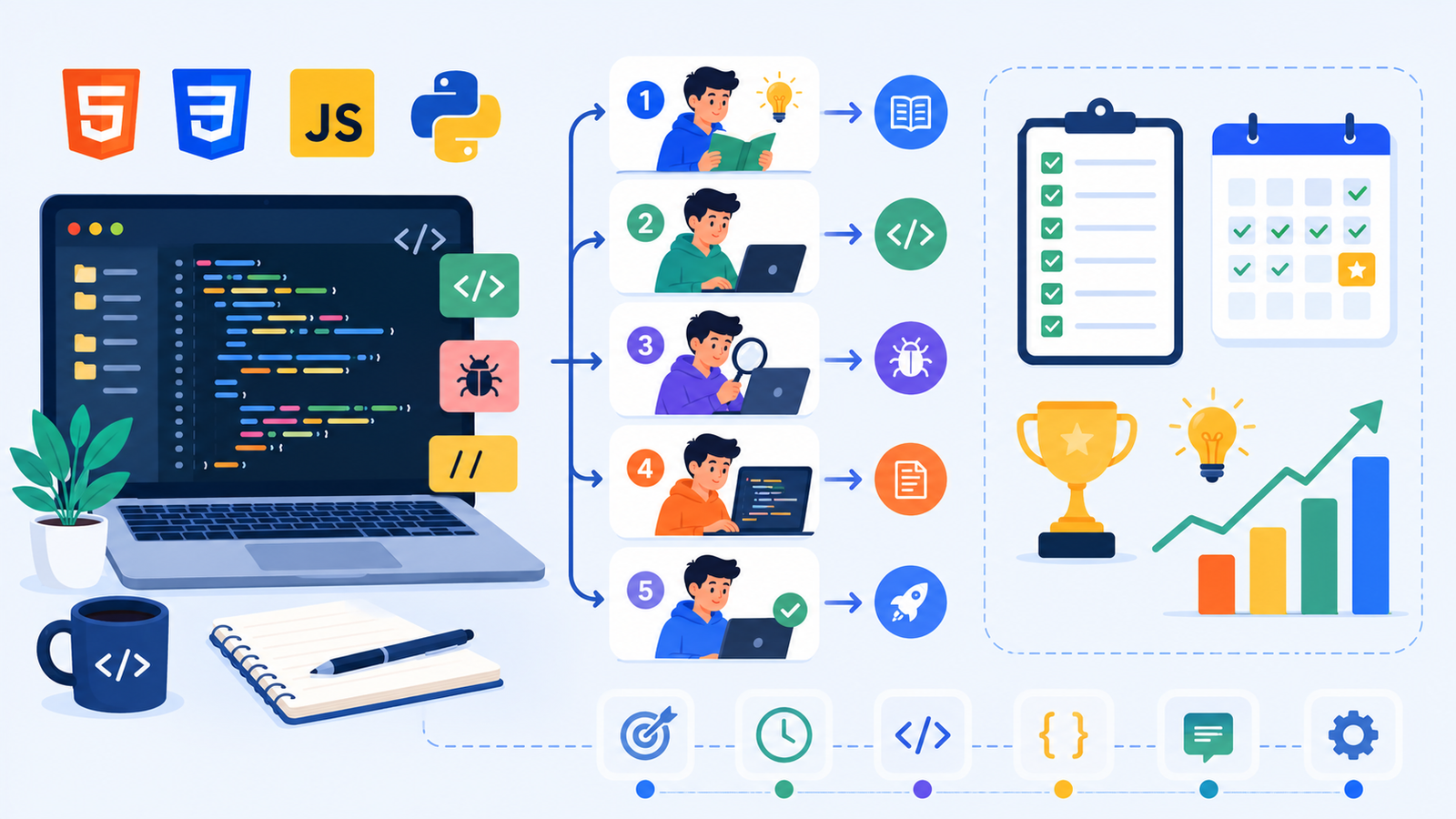
## 7. Learn One Concept at a Time

It's tempting to jump between HTML, CSS, JavaScript, Python, React, and dozens of other technologies.

Instead, focus on mastering one topic before moving to the next.

For example:

1. HTML
2. CSS
3. JavaScript
4. Responsive Design
5. Frameworks

Building a strong foundation makes advanced topics much easier.

## 8. Use Comments Wisely

Comments explain why your code exists.

Example:
javascript id=”d6q9ht”
// Calculate the total price including tax
let total = price + tax;
“`
Avoid commenting on obvious code, but use comments to explain complex logic or important decisions.
Your future self will appreciate it.
9. Review Your Old Code
One of the best ways to measure progress is by revisiting projects you built a few weeks ago.
Ask yourself:
- Can this code be simpler?
- Are the variable names clear?
- Can I remove duplicate code?
You’ll often discover better solutions because your skills have improved.
10. Never Stop Practicing
Programming is a skill that grows with repetition.
Even experienced developers continue learning new tools, languages, and techniques.
Try to:
- Solve one coding challenge each week.
- Read documentation regularly.
- Build personal projects.
- Experiment with new ideas.
Every project teaches something valuable.
Common Mistakes Beginners Should Avoid
Along with building good habits, it’s important to avoid common learning mistakes.
Tutorial Overload
Watching ten tutorials doesn’t replace writing your own code.
Learn a concept, then immediately practice it.
Comparing Yourself to Others
Everyone learns at a different pace.
Focus on becoming better than you were yesterday instead of comparing your progress to someone else’s.
Fear of Making Mistakes
Mistakes are one of the fastest ways to learn.
Every bug you fix makes you a stronger programmer.
A Simple Daily Coding Routine
Here’s an example of a beginner-friendly study plan.
- 10 minutes: Review yesterday’s code.
- 20 minutes: Learn one new concept.
- 20 minutes: Practice with a small exercise.
- 10 minutes: Improve an old project.
This one-hour routine is realistic and sustainable for most beginners.
Practical Tips for Staying Motivated
Learning to code is a marathon, not a sprint.
Here are a few ways to stay motivated:
- Celebrate small wins.
- Track your daily practice.
- Build projects you’re interested in.
- Take short breaks when you’re stuck.
- Join coding communities and ask questions.
Remember that progress isn’t always obvious from one day to the next. Over weeks and months, those small improvements add up.
Final Thoughts
Developing the 10 Coding Habits Every Beginner Should Build will help you become a more confident and capable programmer. Coding isn’t just about memorizing syntax—it’s about practicing consistently, solving problems, and learning from every project you create.
Start by choosing just one or two habits from this list and focus on making them part of your daily routine. As they become natural, add another habit and continue building your skills step by step. Open your code editor today, work on a small project, and remember that every line of code you write brings you closer to becoming the developer you want to be. If you have a favorite coding habit, share it in the comments and inspire other beginners!