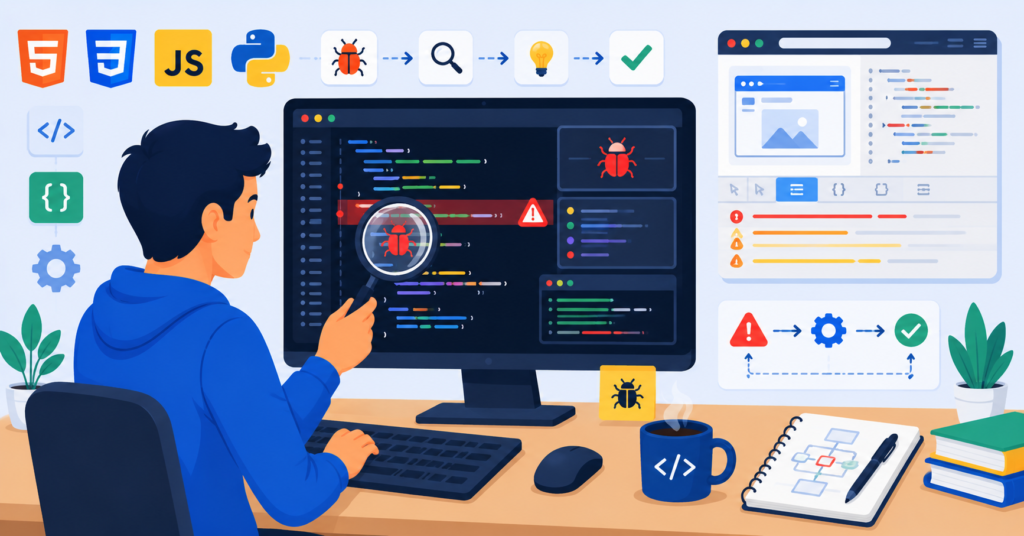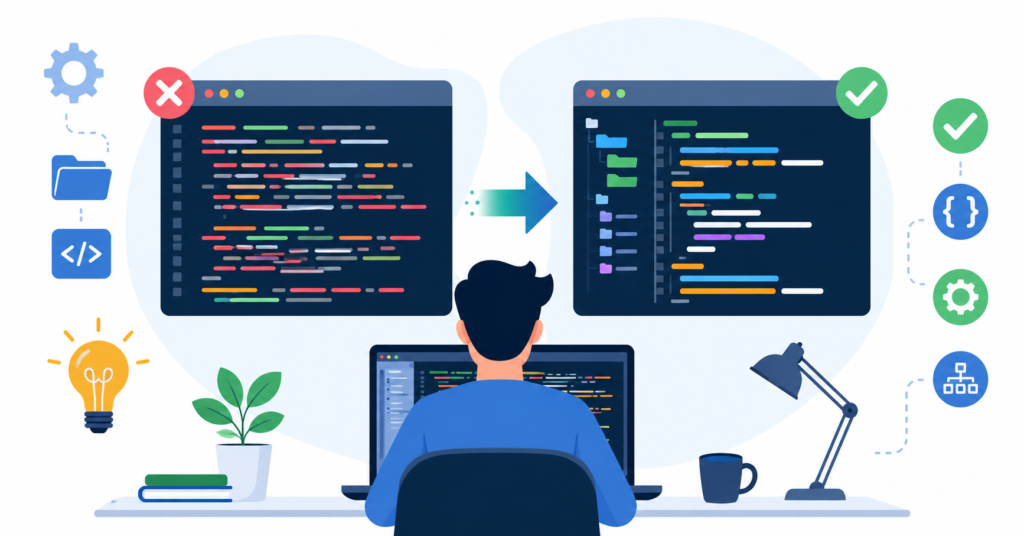
Ever started learning to code with full energy, only to disappear after two weeks? You’re not lazy — you just haven’t built a system yet. Staying consistent while learning to code is less about motivation and more about habits that stick even on your tired, unmotivated days.
Let’s fix that.
Why Consistency Matters More Than Motivation
Motivation is like a phone battery — it drains fast. Consistency is the charger.
Here’s the truth most beginners don’t hear: you don’t need to code for 5 hours a day. You need to show up daily, even if it’s just for 20 minutes. Small, repeated effort compounds way faster than occasional bursts of “coding marathons.”
Think of it like brushing your teeth. You don’t skip it because you’re not “motivated” — it’s just part of your routine.
Set a Realistic Coding Schedule
One of the biggest reasons beginners quit is setting unrealistic goals like “I’ll code 3 hours every day.” Life happens. Work happens. Netflix happens.
Instead, try this:
- Start with 20-30 minutes daily
- Pick a fixed time (morning before work, or night before bed)
- Treat it like a non-negotiable appointment
A schedule you can actually follow beats an ambitious one you’ll abandon in a week.
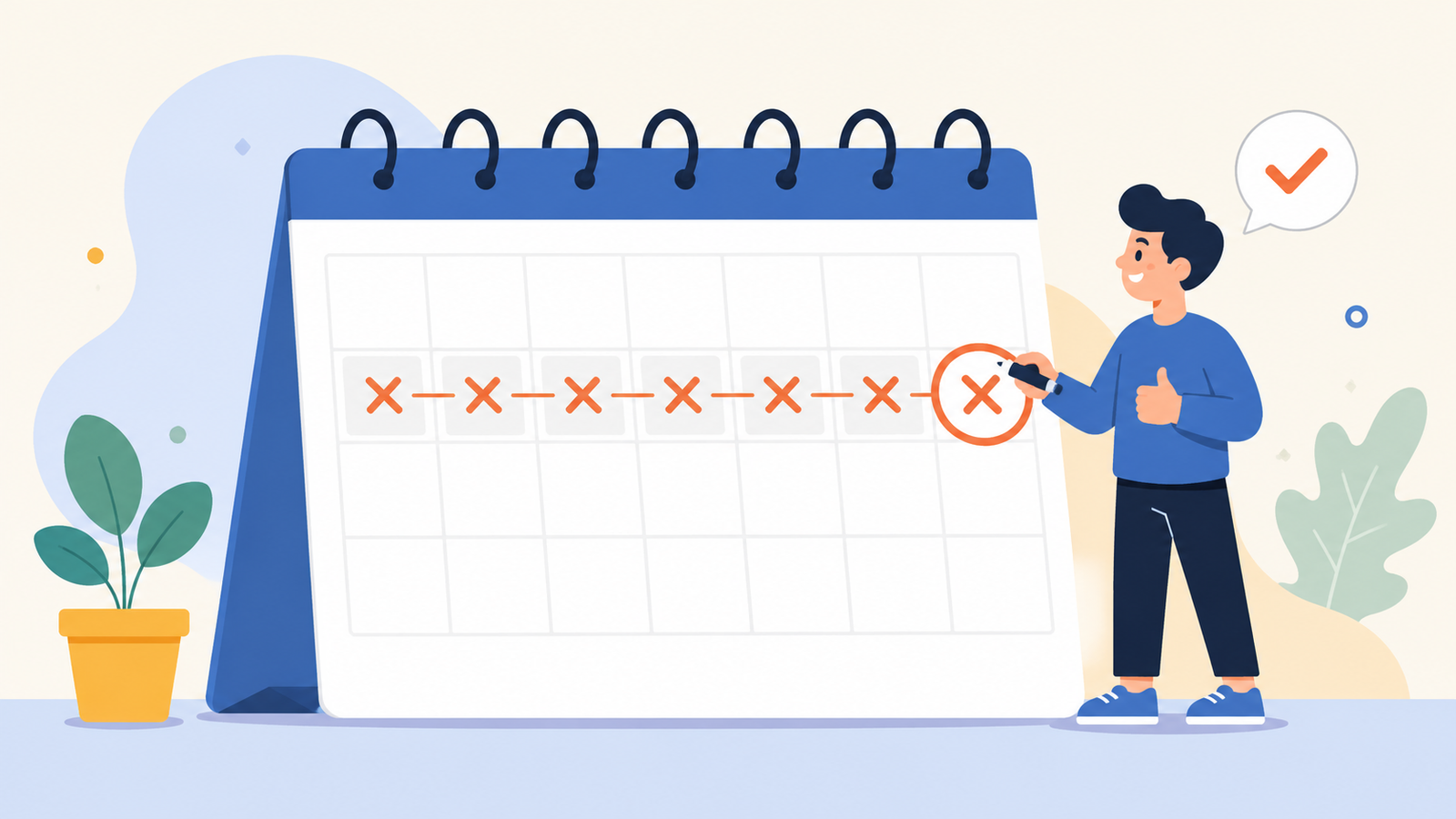
Use the “Don’t Break the Chain” Method
This trick, popularized by comedians tracking their joke-writing streaks, works wonders for coding too.
Here’s how it works:
- Get a calendar (physical or digital)
- Mark an X every day you code — even a little
- Your only job is to not break the chain
After a few days, you won’t want to lose your streak. That’s the psychological trick that keeps you consistent.
Build Small, Achievable Coding Goals
Big goals like “become a full-stack developer” are overwhelming and vague. Break them into smaller, trackable pieces.
For example, instead of “learn JavaScript,” try:
- Week 1: Understand variables and data types
- Week 2: Practice loops and functions
- Week 3: Build a simple calculator project
Each small win gives you a dopamine hit that keeps you coming back.
Example: A Simple Daily Practice Habit
Let’s say you’re learning Python. Instead of watching another 1-hour tutorial, just write one small program daily.
python
# Day 1: Simple Calculator
num1 = float(input("Enter first number: "))
num2 = float(input("Enter second number: "))
operator = input("Enter operator (+, -, *, /): ")

if operator == "+":
    print(num1 + num2)
elif operator == "-":
    print(num1 - num2)
elif operator == "*":
    print(num1 * num2)
elif operator == "/":
    print(num1 / num2)
It’s simple, but writing this yourself teaches more than passively watching someone else code it.
Track Your Progress Visually
Humans love seeing progress. Use tools like:
- GitHub commit streaks
- A simple Notion or Excel tracker
- A “100 Days of Code” challenge (very popular among self-taught devs)
Seeing your streak grow becomes its own motivation. It’s proof that you’re actually moving forward, even on days when you feel like you’re not learning much.
Learn Through Projects, Not Just Tutorials
Tutorial hell is real. You watch, you nod, you feel like you understand — then you open a blank code editor and freeze.
To stay consistent, shift from passive learning to active building.
Try this approach:
- Watch/read a short lesson (15-20 mins)
- Immediately build something related to it
- Break things, fix errors, Google issues
This keeps learning practical instead of just theoretical, which makes the process way more engaging — and engagement fuels consistency.
Join a Coding Community
Learning alone is one of the fastest ways to lose consistency. When you’re stuck, having no one to talk to makes quitting way easier.
Join:
- Discord coding servers
- Reddit communities like r/learnprogramming
- Local meetups or online study groups
Accountability partners or communities remind you that you’re not the only one struggling with that confusing error message at midnight.
Handle Bad Days Without Guilt
Some days you just won’t feel like coding. That’s normal — even experienced developers have those days.
Instead of forcing 2 hours of coding, use the “5-minute rule”:
- Commit to just 5 minutes of coding
- If you still don’t feel like continuing, stop guilt-free
- Most days, once you start, you’ll keep going anyway
This removes the pressure of “all or nothing” thinking, which is often what kills consistency in the first place.
Avoid the Comparison Trap
Scrolling through LinkedIn or Twitter and seeing 19-year-olds building startups can be discouraging. But everyone’s coding journey moves at a different pace.
Focus on:
- Your progress compared to last month, not someone else’s highlight reel
- Small wins like “I finally understood recursion today”
- Long-term growth over short-term comparison
Your only real competition is who you were yesterday.
Reward Yourself for Milestones
Consistency feels easier when there’s a reward at the end of the tunnel. It doesn’t have to be big.
For example:
- Finished a project? Watch an episode of your favorite show guilt-free
- Completed a 7-day coding streak? Treat yourself to your favorite snack
- Solved a tricky bug? Take a proud 10-minute break
Small rewards train your brain to associate coding with positive feelings, not just stress.
Final Thoughts
Staying consistent while learning to code isn’t about being a coding genius or having unlimited motivation. It’s about showing up, even in small ways, and letting those small efforts stack up over time.
Start small. Track your streak. Build real things instead of just watching tutorials. And most importantly — be patient with yourself on the days that feel slow.
Try applying just one tip from this article this week — maybe the “Don’t Break the Chain” method or the 5-minute rule — and see how your consistency improves. Let me know in the comments which one worked best for you!