
Have you ever wondered if you can earn money with your coding skills without working a traditional 9-to-5 job? If so, freelancing as a programmer could be the perfect path for you. Many beginner developers start freelancing to gain real-world experience, build a portfolio, and earn income while continuing to improve their skills.
The best part is that you don’t need years of professional experience to begin. With the right mindset, practical skills, and a few completed projects, you can start offering programming services to clients around the world.
What Is Freelancing as a Programmer?
Freelancing means working independently instead of being employed by a single company. As a freelance programmer, you take on projects for different clients and get paid for completing them.
Some common freelance programming services include:
- Building websites
- Creating web applications
- Writing automation scripts
- Fixing bugs
- Developing APIs
- Maintaining existing software
- Building small desktop or mobile applications
You decide which projects to accept, how much to charge, and when you work.
Why Choose Freelancing?
Freelancing offers several advantages for beginner programmers.
Some of the biggest benefits include:
- Flexible working hours
- Opportunity to work from anywhere
- Continuous learning through real projects
- Building a strong portfolio
- Earning while improving your skills
- Freedom to choose clients and projects
Although freelancing comes with challenges, it also provides valuable real-world experience that employers appreciate.
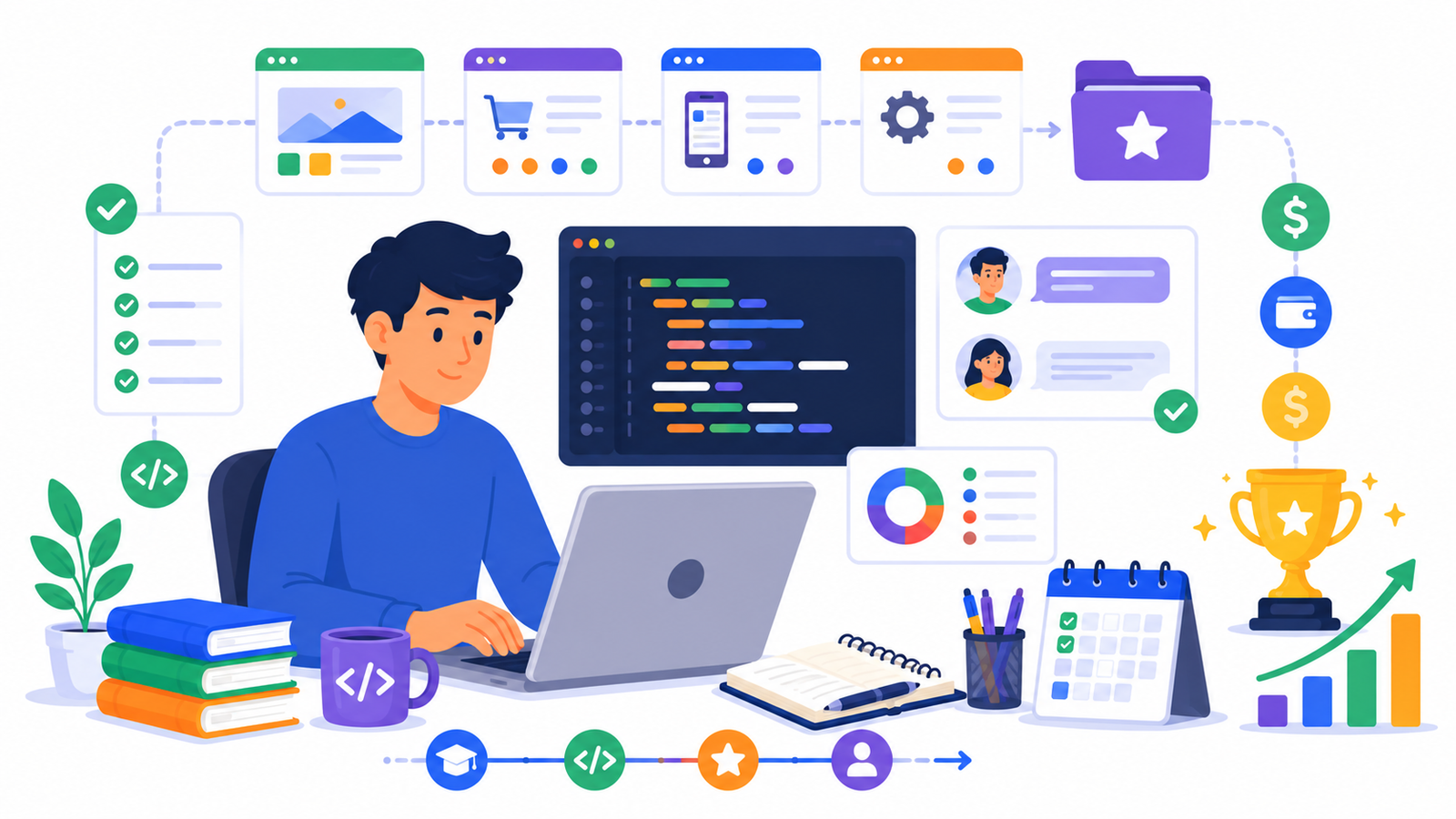
Step 1: Learn the Right Programming Skills
Before looking for clients, build a solid foundation in programming.
Useful skills include:
- HTML and CSS
- JavaScript
- Python
- Git and GitHub
- SQL
- Basic APIs
- Debugging
You don’t need to know every programming language. Becoming confident in one area is much more valuable than knowing a little about many.
Step 2: Build a Portfolio
Clients want proof that you can solve problems.
A portfolio showcases your abilities through real projects.
Include examples such as:
- Personal website
- Calculator
- To-do application
- Weather app
- Blog website
- Portfolio page
- Automation scripts
Each project should include a short explanation of what it does and the technologies you used.
Step 3: Create a Professional Profile
Whether you use freelance marketplaces or your own website, your profile should clearly explain:
- Your programming skills
- Services you offer
- Technologies you know
- Portfolio links
- Contact information
Keep your description simple, honest, and focused on how you can help clients.
Step 4: Start with Small Projects
Many beginners think they need large contracts immediately.
Instead, begin with smaller jobs.
Examples include:
- Fixing website bugs
- Updating existing code
- Creating simple landing pages
- Writing small Python scripts
- Converting designs into HTML and CSS
- Improving website performance
Small projects help you gain confidence and positive client reviews.
Step 5: Learn to Communicate Clearly
Technical skills are important, but communication is just as valuable.
Good freelance programmers:
- Respond quickly.
- Ask questions before starting.
- Explain technical ideas simply.
- Meet deadlines.
- Keep clients updated.
Strong communication often leads to repeat clients and referrals.
Example: A Small Freelance Python Task
Imagine a client asks you to create a simple script that greets users by name.
Here’s a basic example:
python id="f7r2mc" name = input("Enter your name: ") print(f"Hello, {name}! Welcome to our application.")
While this is a simple example, many freelance jobs begin with small tasks before growing into larger projects.
Step 6: Learn Basic Pricing
Pricing can feel difficult at first.
Many beginners start with affordable rates while building experience.
As your portfolio grows, you can gradually increase your prices.
Remember, clients aren’t just paying for code—they’re paying for solutions, reliability, and professionalism.
Step 7: Manage Your Time
Freelancing requires self-discipline.
A simple daily routine might include:
- Checking messages
- Working on client projects
- Learning new skills
- Updating your portfolio
- Reviewing completed work
Managing your time well helps you avoid missed deadlines and stressful last-minute work.
Common Challenges Beginners Face
Every freelance programmer experiences obstacles.
Some common challenges include:
- Finding the first client
- Building confidence
- Setting fair prices
- Handling revisions
- Managing multiple projects
These challenges become easier with experience.
Don’t get discouraged if progress feels slow at the beginning.
Tips for Finding Your First Client
Landing the first client is often the hardest step.
Here are some practical tips:
- Build a strong portfolio.
- Start with smaller jobs.
- Customize every proposal.
- Showcase completed projects.
- Continue improving your skills.
- Ask satisfied clients for reviews.
Positive feedback creates trust and makes it easier to attract future clients.
Keep Learning While Freelancing
Technology changes constantly.
Successful freelance programmers continue learning by:
- Reading documentation
- Following programming blogs
- Building personal projects
- Exploring new frameworks
- Practicing coding challenges
The more skills you develop, the more opportunities become available.
Mistakes to Avoid
Many beginners slow their growth by making avoidable mistakes.
Try not to:
- Accept projects beyond your skill level.
- Miss deadlines.
- Ignore client communication.
- Stop learning after getting your first project.
- Underestimate the importance of testing your code.
Professional habits matter just as much as technical ability.
Final Thoughts
Freelancing as a programmer is an excellent way to gain experience, earn income, and build a rewarding career—even if you’re just starting out. By learning core programming skills, creating a strong portfolio, communicating professionally, and consistently delivering quality work, you can gradually build a successful freelance business.
Remember that every experienced freelancer once completed their very first project. Focus on learning, improving, and building trust with each client. Start with small jobs, continue practicing your coding skills, and don’t be afraid to take on new challenges as your confidence grows.
If you’re ready to begin your freelancing journey, create your first portfolio project today and take the first step toward turning your programming skills into a source of income. Share your freelancing goals in the comments and inspire other aspiring developers to get started.