One of the first questions every beginner asks is, “How long does it take to learn coding?” The answer depends on your goals, the programming language you choose, how often you practice, and the type of projects you build. While there’s no single timeline that fits everyone, the good news is that you don’t need years of study before writing useful programs.
In this guide, we’ll break down realistic learning timelines, the factors that affect your progress, and practical tips to help you learn coding faster without feeling overwhelmed.
Can You Learn Coding Quickly?
Yes—but it’s important to set realistic expectations.
You can learn the basics of programming within a few weeks, but becoming a confident developer takes consistent practice over several months.
Think of coding like learning a new language. You won’t become fluent overnight, but every day of practice builds your confidence and skills.
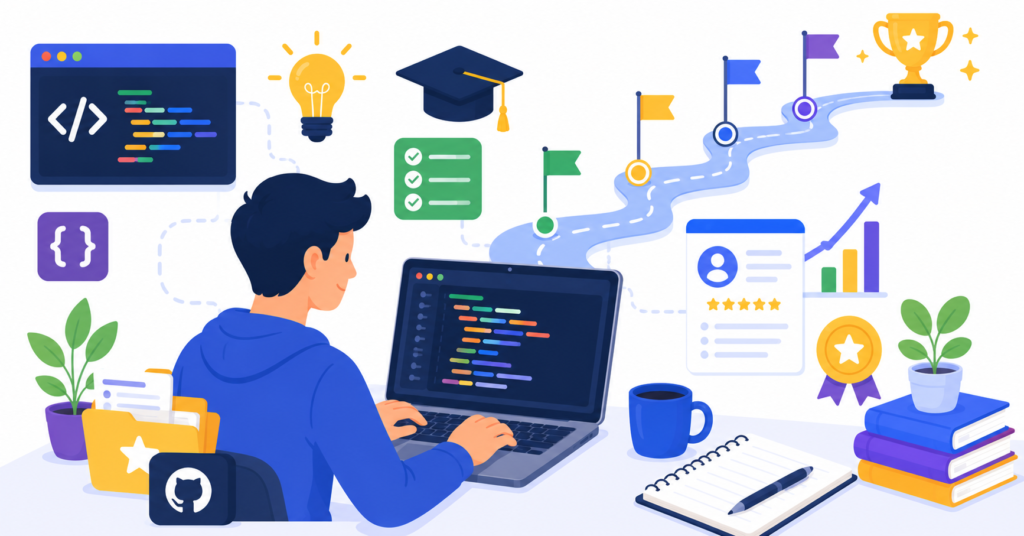
A Realistic Coding Learning Timeline
Here’s a general roadmap for beginners who practice consistently.
1–2 Months: Learn the Basics
During your first couple of months, you’ll become familiar with core programming concepts such as:
- Variables
- Data types
- Loops
- Conditional statements
- Functions
- Basic debugging
At this stage, you’ll be able to write small programs and understand simple coding tutorials.
Example:
python id="k3w9np" name = "Sam" print("Welcome,", name)
Writing simple programs like this helps you understand syntax and logic.
3–6 Months: Build Small Projects
Once you understand the fundamentals, it’s time to apply your knowledge.
Beginner-friendly project ideas include:
- Calculator
- To-do list
- Number guessing game
- Quiz application
- Weather app
- Personal portfolio website
Projects teach you how different programming concepts work together.
You’ll also become more comfortable solving problems on your own.
6–12 Months: Become Job-Ready
If you practice regularly and build several projects, you can start preparing for internships, freelance work, or junior developer positions.
During this stage, you’ll likely learn:
- Git and GitHub
- APIs
- Databases
- Frameworks
- Testing
- Debugging techniques
Many self-taught developers reach this level within a year of consistent learning.
Factors That Affect Your Learning Speed
Not everyone learns at the same pace.
Several factors influence how quickly you’ll improve.
Time You Practice
Coding every day is far more effective than studying once a week.
For example:
- 30–60 minutes daily
- 5–6 days each week
This routine keeps concepts fresh in your mind.
Your Learning Method
Watching videos alone isn’t enough.
A balanced learning routine includes:
- Reading tutorials
- Writing code
- Solving challenges
- Building projects
- Reviewing mistakes
Active practice always beats passive learning.
Your Goals
Learning enough coding to automate small tasks is much faster than becoming a full-stack web developer.
Your timeline depends on what you want to achieve.
Which Programming Language Should You Start With?
Some languages are easier for beginners than others.
Popular beginner-friendly options include:
- Python
- JavaScript
- Java
- C
- Ruby
Python is often recommended because its clean syntax allows beginners to focus on programming logic rather than complicated formatting.
Build Projects Early
One mistake many beginners make is waiting until they “know enough” before building projects.
Start sooner.
Even small projects help you understand coding more deeply.
Ideas include:
- Simple calculator
- Password generator
- Unit converter
- Expense tracker
- Random quote generator
Every completed project increases your confidence.
Practice Solving Problems
Programming is more than memorizing syntax.
It’s about solving logical problems.
Spend time on coding exercises involving:
- Loops
- Arrays
- Strings
- Functions
- Basic algorithms
Problem-solving improves your thinking skills and prepares you for technical interviews.
Common Mistakes That Slow Learning
Many beginners accidentally make their learning journey longer.
Avoid these habits:
- Switching between multiple programming languages.
- Watching tutorials without coding.
- Copying code without understanding it.
- Giving up after encountering bugs.
- Comparing yourself to experienced developers.
Remember, everyone progresses at a different pace.
Focus on your own improvement.
How to Learn Coding Faster
If you want to speed up your progress, try these practical tips:
- Practice every day.
- Build projects after each lesson.
- Review previous concepts regularly.
- Read error messages carefully.
- Keep a coding journal.
- Join programming communities.
- Teach someone else what you’ve learned.
Teaching is one of the best ways to reinforce your understanding.
Stay Consistent Instead of Perfect
Many beginners believe they need long study sessions to succeed.
In reality, consistency matters far more.
Coding for 45 minutes every day is usually more effective than studying for eight hours only on weekends.
Small daily progress builds long-term success.
Don’t Be Discouraged by Bugs
Every programmer encounters bugs.
In fact, debugging is one of the most valuable programming skills.
Instead of getting frustrated:
- Read the error carefully.
- Break the problem into smaller parts.
- Test one solution at a time.
- Learn from each mistake.
Every bug you solve makes you a stronger developer.
When Will You Feel Confident?
Confidence doesn’t appear suddenly.
It grows each time you:
- Finish a project.
- Solve a difficult problem.
- Understand a new concept.
- Fix a bug without help.
After several months of consistent practice, you’ll notice that coding tasks that once seemed impossible now feel much easier.
That’s real progress.
Final Thoughts
So, how long does it take to learn coding? For most beginners, the basics can be learned within a few months, while becoming comfortable enough for real-world projects often takes six to twelve months of regular practice. The exact timeline depends on your goals, dedication, and how much hands-on coding you do.
The most important thing is not how quickly you learn but how consistently you practice. Choose one programming language, build projects, solve coding challenges, and don’t be afraid to make mistakes. Every hour you spend writing code brings you closer to becoming a skilled developer.
Start today with one small project or coding lesson, and keep showing up every day. Your future self will thank you for the progress you make one line of code at a time.