If you’re thinking about learning programming, you’ve probably asked yourself, “Is Python a good language for beginners in 2026?” The short answer is yes. Python continues to be one of the most beginner-friendly programming languages thanks to its simple syntax, massive community, and wide range of real-world applications. Whether you dream of becoming a web developer, data analyst, AI engineer, or automation expert, Python is an excellent place to start.
In this guide, we’ll explore why Python remains one of the best programming languages for beginners, where it shines, and how you can start learning it effectively.
Why Python Is So Popular
Python has consistently ranked among the world’s most popular programming languages for years. One of the biggest reasons is its focus on readability. Unlike many other languages, Python allows you to write clean, easy-to-understand code with fewer lines.
It’s widely used by:
- Software developers
- Data scientists
- AI and machine learning engineers
- Cybersecurity professionals
- Automation specialists
- Web developers
Learning Python opens the door to many exciting career opportunities.
Simple Syntax Makes Learning Easier
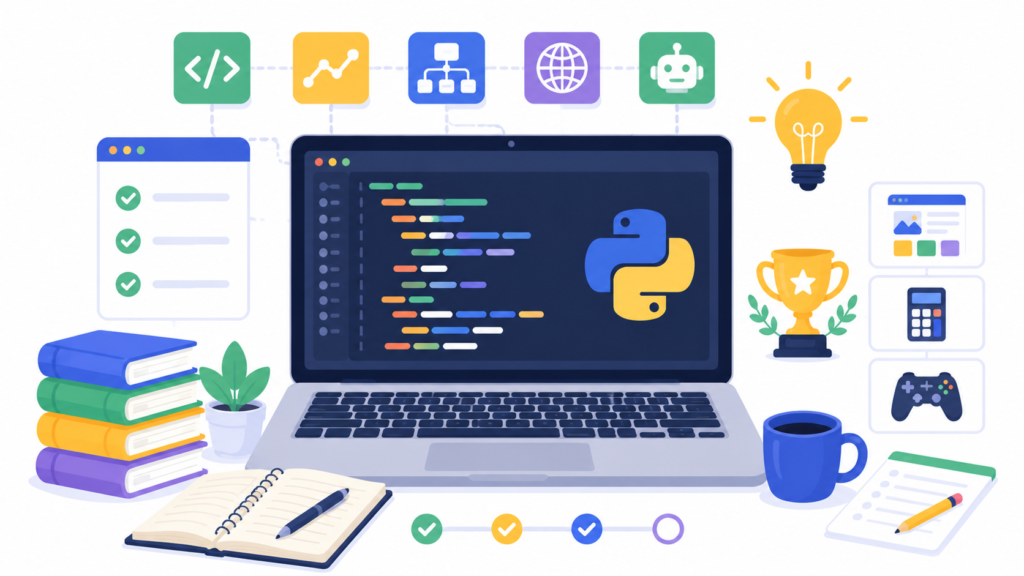
One reason beginners love Python is that its syntax looks almost like plain English.
For example:
“`python id=”q8m3pa”
name = “Alex”
print(“Welcome,”, name)
Even if you've never written code before, it's easy to understand what this program does.

Compare that to some other programming languages that require extra symbols and complex formatting. Python lets you focus on programming logic instead of worrying about complicated syntax.

Large Community and Learning Resources

When learning to code, you'll eventually get stuck—and that's completely normal.

Fortunately, Python has one of the largest programming communities in the world.

You'll find:

* Free tutorials
* Video courses
* Coding forums
* Documentation
* Beginner guides
* Open-source projects

Because so many people use Python, finding answers to your questions is usually quick and easy.

 Python Is Used in Many Industries

Another advantage of learning Python is its versatility.

Instead of being limited to one field, Python is used across many industries.

Some popular applications include:

 Web Development

Python powers websites and web applications using frameworks like Django and Flask.

 Data Science

Analysts use Python to process large datasets and create visualizations.
 Artificial Intelligence

Many AI and machine learning projects rely heavily on Python because of its powerful libraries.

 Automation

Python can automate repetitive tasks such as organizing files, sending emails, or generating reports.

 Cybersecurity

Security professionals use Python for scripting, penetration testing, and network analysis.

Learning one language that works in so many fields makes your time investment worthwhile.

Beginner-Friendly Libraries

Python's ecosystem includes thousands of libraries that simplify programming.

Instead of writing everything from scratch, you can use existing tools.

Popular libraries include:

* NumPy
* Pandas
* Matplotlib
* Flask
* Django
* Requests

As a beginner, you don't need to master them immediately, but it's nice knowing they're available as your skills grow.

 Easy to Read and Maintain

Good code isn't just about making programs work.

It's also about making them easy to understand.

Python encourages clean formatting and readable code.

For example:
python id=”z5r1uv”
for number in range(1, 6):
print(number)
“`
Even someone new to programming can quickly understand what this loop does.
Readable code becomes increasingly important when working on larger projects or collaborating with others.
What Are the Challenges of Learning Python?
Although Python is beginner-friendly, it’s not completely effortless.
Some concepts still require practice, including:
- Loops
- Functions
- Object-Oriented Programming
- File handling
- Error handling
The good news is that these concepts exist in nearly every programming language. Learning them in Python is often easier because the syntax is simpler.
Should You Learn Python Before Other Languages?
For many beginners, yes.
Python helps you build strong programming fundamentals before moving to languages like:
- JavaScript
- Java
- C++
- C
- Go
Once you understand programming logic in Python, learning another language becomes much easier because many concepts remain the same.
Best Ways to Learn Python
To make steady progress:
- Practice every day.
- Build small projects.
- Solve coding challenges.
- Watch beginner tutorials.
- Read documentation.
- Review your old code.
- Learn by fixing mistakes.
Avoid spending all your time watching videos without writing code.
Programming is a practical skill that improves through consistent practice.
Beginner Project Ideas
Once you’ve learned the basics, try creating simple applications.
Ideas include:
- Calculator
- Number guessing game
- Password generator
- To-do list
- Expense tracker
- Quiz application
- Random quote generator
Projects help you connect programming concepts and build confidence.
Common Beginner Mistakes
Many new learners slow their progress by making simple mistakes.
Try to avoid:
- Switching between multiple programming languages too early.
- Memorizing code instead of understanding it.
- Skipping practice exercises.
- Comparing yourself with experienced developers.
- Giving up after encountering bugs.
Every programmer writes buggy code.
Learning to solve those bugs is part of becoming a better developer.
Is Python Still Worth Learning in 2026?
Absolutely.
Despite the rise of new technologies, Python continues to grow in popularity because it’s flexible, beginner-friendly, and supported by a massive community.
Whether your goal is:
- Web development
- Artificial intelligence
- Automation
- Data science
- Software development
Python provides a strong starting point.
Learning Python today also makes learning future technologies much easier.
Final Thoughts
So, is Python a good language for beginners in 2026? Without a doubt. Its clean syntax, extensive learning resources, powerful libraries, and wide range of career opportunities make it one of the best programming languages for anyone starting their coding journey.
The key is not just choosing Python but committing to learning it consistently. Practice regularly, build simple projects, ask questions when you’re stuck, and don’t be afraid to make mistakes. Every experienced developer was once a beginner learning their first programming language.
If you’ve been waiting for the perfect time to start coding, this is it. Install Python, write your first program, and enjoy the process of learning something that can open countless opportunities in the future. If you’re already learning Python, share your experience in the comments and encourage other beginners to get started.